STAR1
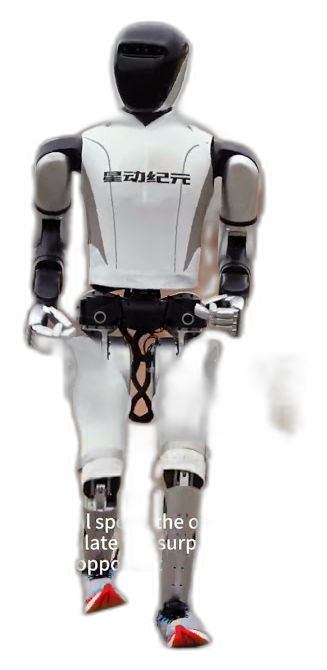
RobotEra's STAR1 holds the record as the world's fastest humanoid robot, reaching sustained speeds of 3.6 meters per second (nearly 13 km/h). Standing 171 cm tall and weighing 63 kg, the STAR1 packs 55 degrees of freedom, including 12-DOF direct-drive hands with the XHAND1 system. Its fully direct-d...
Capability Assessment
Humanoid Index Assessment — scores derived from published specifications and deployment data.
See STAR1 In Action
Sneaker-wearing STAR1 navigates Gobi Desert with ease — Official
Want the full picture?
This robot is one of 30+ manufacturers in our free 2026 Landscape Report. Full market map, specs comparison, and pricing data.
Download Free Report →
Specifications
| Height | 5'7" (171 cm) |
| Weight | 63 kg |
| Max Speed | 3.6 m/s |
| Degrees of Freedom | 55 |
| DOF (Hands) | 12 per hand |
| Fingers | 10 |
| Gait Type | Bipedal |
| Motor Type | Direct-drive (400 Nm peak) |
| Sensors | Stereo cameras, depth sensors, IMU |
| AI Integration | ERA-42 AI model |
Specs vs Field Average
How STAR1 compares to the average across all indexed robots (normalized 0-10 scale)
About STAR1
RobotEra's STAR1 holds the record as the world's fastest humanoid robot, reaching sustained speeds of 3.6 meters per second (nearly 13 km/h). Standing 171 cm tall and weighing 63 kg, the STAR1 packs 55 degrees of freedom, including 12-DOF direct-drive hands with the XHAND1 system. Its fully direct-driven joints deliver up to 400 Nm of torque at peak rotational speeds of 25 radians per second. The robot demonstrated terrain adaptability by running through the Gobi Desert in standard sneakers, showcasing its reinforcement learning-trained gait stability. RobotEra, founded by a Tsinghua University team, runs the STAR1 on its ERA-42 AI model for end-to-end task planning and multimodal sensor fusion.
Made by RobotEra
STAR1 humanoid. Ex-Tsinghua team. Record-breaking walking speed demonstrations.
Use Cases
Compare This Robot
Other bipedal robots you can compare